
Winter Sowing
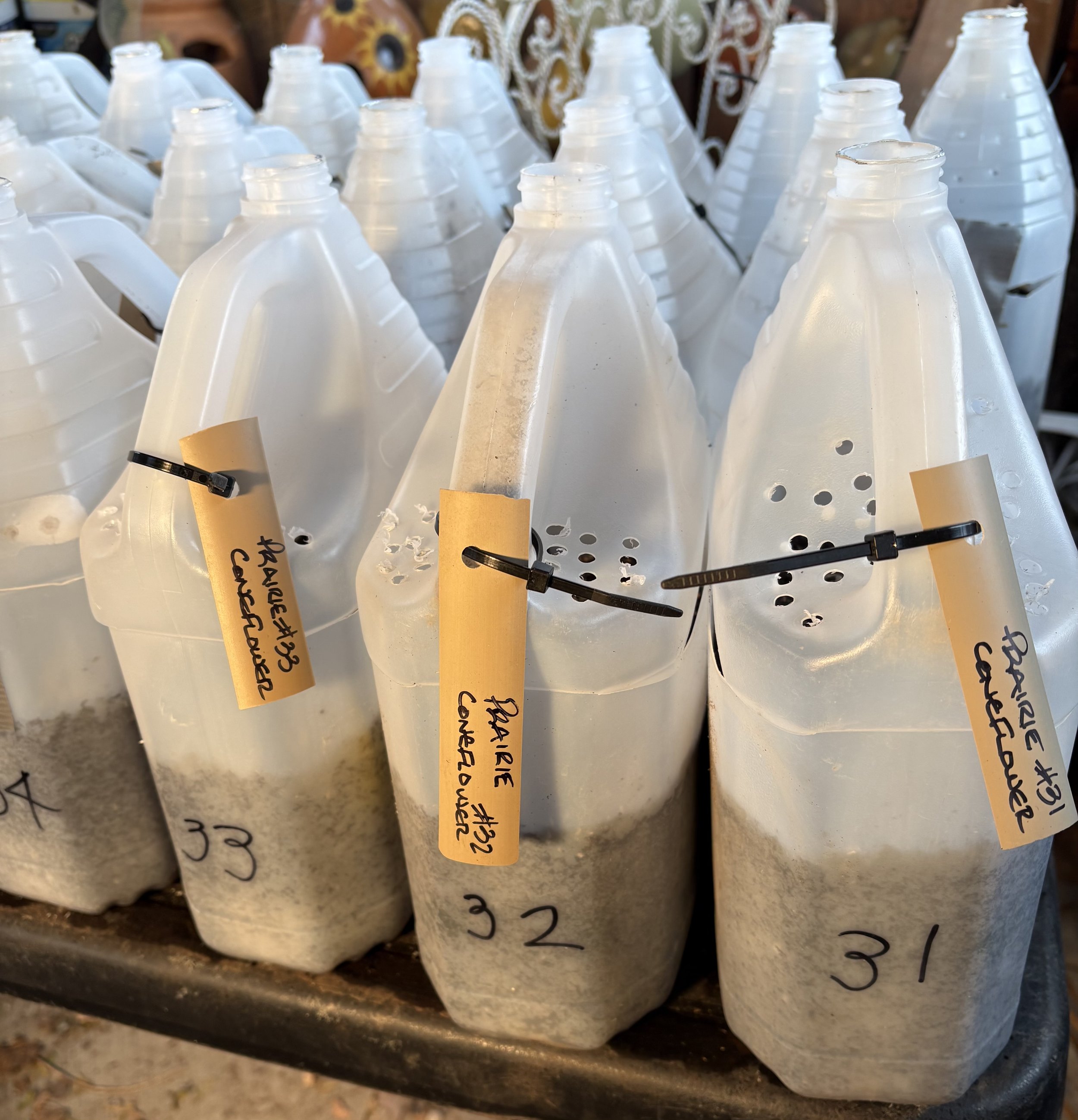
Photo courtesy of Lynn Imeson
Have you ever tried winter sowing? It’s a great way to start seeds that require cold stratification to germinate (and saves you having to put them in your fridge in the spring). Here’s some tips for successful winter sowing (Source - Lynn Imeson)
To get started, gather clear or translucent containers—like vinegar or water jugs, kitty litter containers, or clamshells.
Use a potting mix or compost blend, not regular garden soil.
You’ll need a drill or tool to make holes, duct tape, plant labels (like mini-blind tags), a durable marker, and zip ties.
Prepare Containers
First, remove and discard the container lids.
Drill plenty of holes in the bottom for drainage and in the shoulders or sides for ventilation.
Cut open three sides of the jug below the handle, leaving the handle side as a hinge.
Add 3–4 inches of moist soil, then place the containers outdoors until you’re ready to sow.
The jug protects seeds from critters, windblown seeds, and heavy rain or snow melt.
Label Everything
Assign each jug a unique number on both the front and back.
Keep a matching seed list for reference.
Prepare tags with the seed name and jug number, and attach them to the jug handles with zip ties.
Double labeling helps prevent mix-ups later.
Sow Seeds (January or February)
Sow seeds indoors or in a warm space during January.
Make sure the soil is moist—even if it’s frozen, that’s fine.
Sprinkle seeds on the surface without covering them, then press gently into the soil.
Close the jug and secure it with a single piece of duct tape at the front.
Set Outside
Place the jugs on open ground, not against buildings or under overhangs.
Make sure they’re stable and won’t blow over.
Monitor moisture levels—never let the soil dry out completely.
Spring Care (April – June)
Seeds will germinate naturally in spring, with timing depending on weather and seed type.
Once critters are no longer a risk, open the duct tape.
Water if the soil is dry and provide dappled shade during heat waves.
Transplanting
Transplant seedlings when they reach about 2.5 inches tall.
Fragile seedlings should be potted up until they’re stronger; sturdier ones can go straight into the garden.
For dense seedlings, use the “hunk-of” method: lift small cubes, pot them, and separate later.
Success Tips
Remember: more holes mean better airflow.
Using just one piece of tape makes spring access easier.
Double labeling is key to avoiding confusion.
It’s normal and ideal for soil to settle over winter.